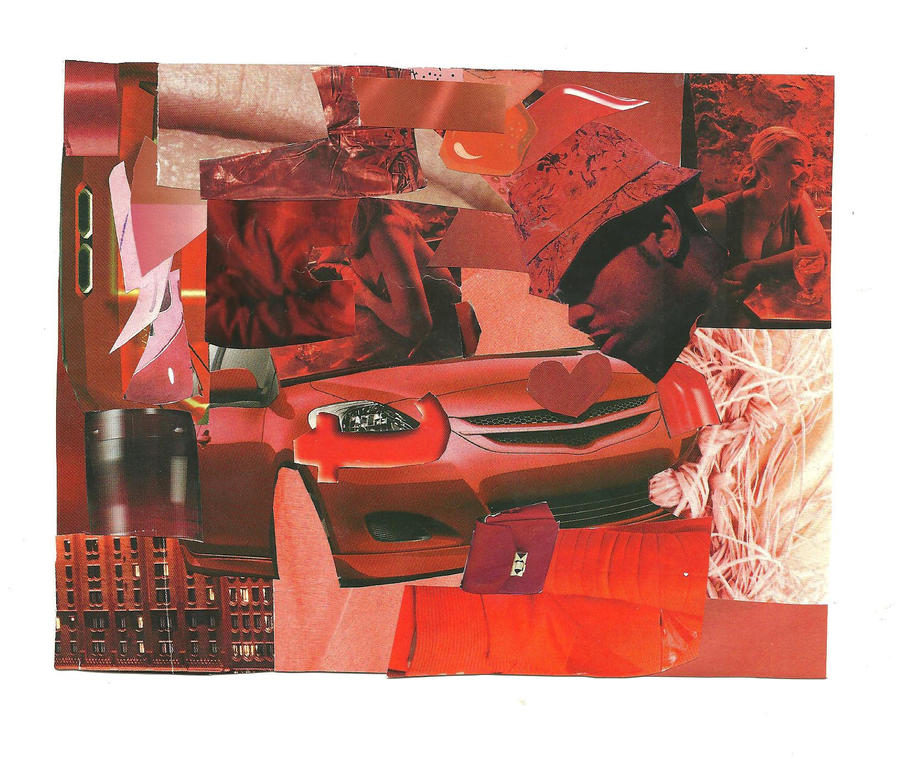
Art is a microscope which the artist fixes on the secrets of his soul,

and shows to people these secrets which are common to all. ~ Leo Tolstoy


26.10.11

Traditions of African American Quilt

GUEST SPEAKER:
Glendora Simmonson
Nubian Quilters Guild
Exerts from 
SIGNS & SYMBOLS: 
African Images in 
African American Quilts 
by Maude Southwell Wahlman

Our study of symbols that impact African American traditions took a somewhat bumpy turn last week as we concluded watched "Ethnic Notions." On a more positive cultural note, the above publication is the result of years of research study and travel to rural communities in the South, to begin to analysis the relationship between African symbols and their American counter parts in African American quilts... 

In this book Maude Southwell Wahlman, talks about an exhibit she curated along with John Scully at the Yale School of Art Gallery in January 1980. At that time they noticed seven traits that seemed to distinguish African American quilts from the Anglo-American traditions. Even though these African American quilts communities worked in isolation of from other each other. They found a distinct emphasis on the following design elements:

1.   vertical strips
2.   bright colors
3.   large designs
4.   asymmetry
5.   improvisation
6.   multiple patterning
7.   symbolic forms

This aesthetic criteria was just a starting point for beginning to understand how African textiles influenced early generations of African American quilters, and continue to influence mostly Southern communities as well. Wahlman determined that "many guilt-top designs were similar to designs found in African religious textiles, designs that can be decoded because contemporary Africans know what the symbolic designs mean."

"...The antecedents of contemporary African textiles and African American quilts were developed in Africa as far back as two thousand years ago, when cotton was domesticated along the Niger River in Mali, and used for fishnets and woven cloth. The actual links between African and African American textile traditions [however], can be traced to the years between 1650 and 1850." Which coincides with the height of slave trade in the Americas.

"Although men had traditionally been the primary textile artists in Africa, American plantation owners adhered to the European system of labor division. Thus African women became the principal weavers, seamstresses, and quilters in southern society. African women produced utilitarian and decorative  quilts for both black and white households. Many of their quilts were done in the traditional Anglo-American styles. However, those quilts made for personal, offer utilitarian, uses by African Americans were designed and stitched with African traditions in mind."

For the purposes of the paper quilt we will construct in class we will be borrowing from the following criteria:

Strip quilt by Catherine Somerville Alabama 1940

  • STRIPS: which are chief construction techniques and a dominant design symbol in West Africa, the Caribbean and African American textiles. This is a form of patchwork, that occur in African textile history among the Fante Asafo flags, Asante cloth from Ghana, Egungun costumes of the Yoruba people of Nigeria and the Kuiba people of the Cameroon, and the Pygmies of Central Africa. In the printed textiles of the Dioula people of Senegal, and Sierra Leone. A tradition of strips also continued in the new world in Southern part of North America, Brazil and Suriname, in South America, and in Haiti via a striped cloth called Mayo, worn to protect one against evil spirits.


Bible Textile by Harriet Powers, Athens, Georgia, c 1896

  • APPLIQUÉD: Besides piecing, in which strip patterns dominated, another basic quilt technique known in Europe, Africa, and America is the appliqué, the art of sewing cut-out shapes onto a surface. African cultures used this technique to record histories, religious values, and the personal histories of famous individuals.  Popular designs would symbolize power, skill, leadership, wisdom, courage, balance, composure, and other personal or religious qualities. The best known African appliquéd cloth was made by the Fon people of the Republic of Benin (formerly Dahomey). The most noted example of African American appliquéd was created Harriet Powers. 

ALBUM QUILT, Josie Covington, Triume,TN 1895
  • RELIGIOUS SYMBOLS: An analysis of African American  folk art suggests a cultural strategy of sorting African heritages into luxuries as essential intellectual tools to comprehend the new world... Writing and healing charms are two significant religious concepts that had profound influence on traditional African American folk art. Adinkra symbols fall into this category. Adinkra symbols are used by the Asante people of Ghana to make Adinkra cloth; Nsibidi script is used by the Igbo people of Nigeria to create Ukara cloth. Other symbols include Vai Syllabary, cosmograms, and ground paintings. The African American quilt descendant of these symbols is the "Album Quilt." Exemplifying the African American principle of protective multiple patterning, because evil spirits would have to decode the complex mixture of  patterns before they could do any harm. 
MEN QUILT, by Sarah Mary Taylor, 
Yazoo City MS, 1979


  •  PROTECTIVE CHARMS: Various African traditions of healing or protective charms have experienced a renaissance in African American visual arts, including quilts. In the new world, they took different forms and meanings, partly because ideas from West and Central Africa fused and then creolized with Native American and European ideas in new cultural environments. Charms are an important aspect of African American religious societies. Charms are made in Africa and the New World by priest or priestess, conjure man or women, spirit-diviner or folk artist. Protective charms were (are) used on ceremonial hats and clothing, various kinds of dolls such as voodoo and calabash, and quilts. Symbols include hands, animals, colors, and words. Like the album quilt African and African American folk art culture uses words to confuse spirits. 
Faith Ringgold, The Dinner Quilt, 1986
  •  CONTEMPORARY TRENDS: Finally, African American quilting is a unique American art form with its own history and style.... All art exist within a cultural complex as one aspect of the material objects produced by living peoples in concert with other aspects of their lives. The images used in African American quilts are drawn from a bevy of emotions, events, activities, life passages. Contemporary quilters and mixed media artists such as Faith Ringgold, NedRa Bonds, Jesse Lane, Wini McQueen, Joyce Scott, and Yvonne Wells, and others have drawn on traditional folk designs for inspiration in creating their fine arts.
https://lh5.googleusercontent.com/-zjLU2WmdkHQ/TXghCEB4_CI/AAAAAAAAACA/sbM3n0H5XQk/Applique.jpg
Appliqué cloth Republic of Benin; Fon peoples Late 20th century 

ADDITIONAL INFORMATION:

Village Women
Ndebele Woman sitting in front of her wall painting


http://www.warthog.co.za/dedt/tourism/zululand/pix/symbols.gif
Symbols of South-East Africa

1.10.11

PERSONAL NARRATIVE COLLAGE: Part II.... Telling the Bigger Story


Romare Bearden Cover of Fortune Magazine

All of our lives are filled with stories....A narrative is a story that is created in a constructive format (as a work of art, speech, writing, song, film, television, video game, photography or theatre) that describes a sequence of fictional or non-fictional events, experience or ideas. The word derives from the Latin verb narrare, "to recount", and is related to the adjective gnarus, "knowing" or "skilled". Ultimately its origin is found in the Proto-Indo-European root gnō-, "to know".[1]

Narrative is one of the first forms of writing we learn in school. We are taught to write simple stories about ourselves. In this more advanced version of story we are learning to share our life with others and vicariously experiencing the things that happen around us. Your assignment is put the reader/viewers in the midst of the action of your life letting him or her live through your experience. In other words, to see into your life and family circumstances and perhaps understand you better.

When you create a "visual family narrative" you are making your story readable through a series of images. Your job will be to make the story interesting - as interesting for your reader/viewer as it was for you when it happened to you, or when you felt what you felt. Most of us have events in our lives and families that for whatever reason have never been told....

This semester we have briefly discussed the narrative work of celebrated American artist Romare Bearden. How he used his collages to come to terms with to two distinct lives he lived in the rural South verses that of the more complicated north. You can reference the class handout about Bearden, to see how he used things like Trains, Spirit Figures (Conjurers), Rural shacks, Row houses, Large hands, Birds, Musicians African sculpture and windows to tell his story. To create a visual narrative about his family life that helps us better understand him. (Note the image above, how Bearden saw the urban streets of Harlem).


http://media.oregonlive.com/news_impact/photo/york-9jpg-53690143601136fb.jpg
Alison Saar: York: Terra Incognita
 Above is part of a work by Los Angeles-based artist Alison Saar. Her sculptures and installations explore themes of race, gender, and identity. Her art is a personal form of visual narrative that demonstrates an appreciation of a rich diversity of materials, techniques, and cultural aesthetics around her. The above image is part of Saar’s work called "York: Terra Incognita," a tribute to the memory of William Clark’s slave York. This work is an important visual narrative because it helps to tell a story that was never properly documented prior to the commission of this sculpture.

Though Saar's work is not collage based. We can learn from the power and beauty of what she has created by understanding more of the narrative she worked from. See the below YouTube story about York's life below to understand the importance of this visual narrative....


In class I try to share with you the necessity of using your time wisely.  Getting the most out of each experience we explore in class.
 By harvesting memories from your life and circumstances and dealing with them through the medium of collage. If can be a powerful tool for personal growth if you are willing to do the work. I hope you will dig, listen to the words given to you by the person you interviewed, share freely with us, and discover new meaning and purpose in the process. Life is much shorter than you think. The people in our lives are only there for a season. Capture what you can from them so you can understand the bigger story of who you are...

Please comment here on your experience in doing the Oral History Interview Project. Was it helpful to to a personal narrative first? Does understanding your family origins better add you your appreciation of who you are? List one thing you learned from the person you interviewed that you had not known before....

A personal narrative by Professor Nichol that has to do with love, family, relationship and my great grandfather.

PERSONAL NARRATIVE COLLAGE: Part II.... Telling the Bigger Story


Romare Bearden Cover of Fortune Magazine

A narrative is a story that is created in a constructive format (as a work of art, speech, writing, song, film, television, video game, photography or theatre) that describes a sequence of fictional or non-fictional events, experience or ideas. The word derives from the Latin verb narrare, "to recount", and is related to the adjective gnarus, "knowing" or "skilled". Ultimately its origin is found in the Proto-Indo-European root gnō-, "to know".[1]

Narrative is one of the first forms of writing we learn in school. We are taught to write simple stories about ourselves. In this more advanced version of story we are learning to share our life with others and vicariously experiencing the things that happen around us. Your assignment is put the reader/viewers in the midst of the action of your life letting him or her live through your experience. In other words, to see into your life and family circumstances and perhaps understand you better.

When you create a "visual family narrative" you are making your story readable through a series of images. Your job will be to make the story interesting - as interesting for your reader/viewer as it was for you when it happened to you, or when you felt what you felt. Most of us have events in our lives and families that for whatever reason have never been told....

This semester we have briefly discussed the narrative work of celebrated American artist Romare Bearden. How he used his collages to come to terms with to two distinct lives he lived in the rural South verses that of the more complicated north. You can reference the class handout about Bearden, to see how he used things like Trains, Spirit Figures (Conjurers), Rural shacks, Row houses, Large hands, Birds, Musicians African sculpture and windows to tell his story. To create a visual narrative about his family life that helps us better understand him. (Note the image above, how Bearden saw the urban streets of Harlem).


http://media.oregonlive.com/news_impact/photo/york-9jpg-53690143601136fb.jpg
Alison Saar: York: Terra Incognita
 Above is part of a work by Los Angeles-based artist Alison Saar. Her sculptures and installations explore themes of race, gender, and identity. Her art is a personal form of visual narrative that demonstrates an appreciation of a rich diversity of materials, techniques, and cultural aesthetics around her. The above image is part of Saar’s work called "York: Terra Incognita," a tribute to the memory of William Clark’s slave York. This work is an important visual narrative because it helps to tell a story that was never properly documented prior to the commission of this sculpture.

Though Saar's work is not collage based. We can learn from the power and beauty of what she has created by understanding more of the narrative she worked from. See the below YouTube story about York's life below to understand the importance of this visual narrative....


In class I try to share with you the necessity of using your time wisely.  Getting the most out of each experience we explore in class.
 By harvesting memories from your life and circumstances and dealing with them through the medium of collage. If can be a powerful tool for personal growth if you are willing to do the work. I hope you will dig, listen to the words given to you by the person you interviewed, share freely with us, and discover new meaning and purpose in the process. Life is much shorter than you think. The people in our lives are only there for a season. Capture what you can from them so you can understand the bigger story of who you are...

Please comment here on your experience in doing the Oral History Interview Project. Was it helpful to to a personal narrative first? Does understanding your family origins better add you your appreciation of who you are? List one thing you learned from the person you interviewed that you had not known before....

A personal narrative by Professor Nichol that has to do with love, family, relationship and my great grandfather.

15.9.11

PERSONAL NARRATIVE COLLAGE

http://p2.la-img.com/765/22266/7736341_1_l.jpg
Romare Bearden: "Jazz II Deluxe" 1980

http://1.bp.blogspot.com/_MdUevtq_4n0/TTO7zjUt8WI/AAAAAAAACco/ZYO4YNc1ck0/s1600/Screen%2Bshot%2B2011-01-16%2Bat%2B5.17.36%2BPM.png
Romare Bearden: title unknown...

http://img.artknowledgenews.com/files2010jan/Romare-Bearden-The-Block.jpg

Yesterday, we worked on personal narrative collages. First by examining the work of Romare Bearden. From him we learned that a "narrative collage" does not have to be a literal image or photograph of you. It can be about feelings. About who you are and how you grew up....

Romare used symbols like trains, rural shacks, large hands, birds, cats, musicians  roosters, African Sculpture, hills, and windows to illustrate the memories of growing up between Harlem, New York, and Charlotte, (in Macon) North Carolina. These images brought him comfort, and peace. Helping him work out the difficulties and complex feelings that come with traveling between a very simple rural lifestyle in North Carolina, to the fast city pace of Harlem.


http://www.djodiaka.com/wp-content/uploads/2010/08/214643.jpg
Romare Bearden: Collage
Yesterday too, you shared some of your personal narrative with the rest of the class... Having to stand before a group of people is not always easy but good personal development. What did you learn about yourself during this exercise? How can you incorporate these feelings and other personal experience is your "Narrative Collage?"

Share something you learned yesterday, or some ideas you have about your plans for your collage, by responding to this post.

6.9.11

LECTURE I: Creative Journalling, Basic Introduction

Above work, Journal Page by Professor Nichol: "Norma Dale..." 2011

We will begin mastering basic collage techniques, by creating a visual biography, based on written version, after all presentations have been made.
Please view the following video, and read accompanying article for class tomorrow:
Creative Journaling

ADDITIONAL ASSIGNMENT INFO:
__________________________________________________________________

WEEK 1           1: NARRATIVES PROJECTS        
SEPT 7         BASIC COLLAGE          
                                                                     
                     PRSENTATION FIRST NARRATIVE Personal Biography-- In class-- DUE 9-7-11
                     INTRODUCTION: Syllabus requirements, supplies etc...
  •      READ FROM TEXT:         Introduction + Page 10 CREATIVE WILDFIRE by L.K. Ludwig
  •       TERMS:       "Journaling" "Art Journal" "Personal Narrative" " Wildfire (=artistic play)"

__________________________________________________________________

If you missed class last Wednesday, and do not have the text for this course, please go to this link on Amazon.com. Click "Search Inside this book" then scroll down to page 10 and read. (Introduction not available here).

See you in class tomorrow!

31.8.11

WELCOME!

Welcome Back Students!

This blog will begin posting over the weekend (September 1-4). You should check here for updates before class on Monday. Also, you will receive your curriculum on Monday. Listing the assignments that interact with the blog.

I am looking forward to getting to know you. I believe the context of this course is remarkable - if not life changing. I hope that you will take full advantage of the tools presented here and in the classroom to make this semester and important learning experience. That you will value for a lifetime.

Best Regards,
Professor Nichol

12.7.11

SUMMER BREAK

This Blog is an on-line companion resource for CAT 101- COLLAGE MEMORY, a course offered at Bloomfield College in Bloomfield, New Jersey. Its propose is to provide opportunities to share information around the craft of collage. Using the medium to examine personal writings, events, feelings and ideas.


Postings will begin again on this course the first week of classes in September. In the meantime, thanks for stopping by. If you love making collages, and just want to experiment with art, there are a variety of resources and images banks attached to this blog on the SUPPLIES page, and the left hand column. In particular, there are wonderful FREE as well as for pay sites where you can download thousands of images, and design motifs to assist your process. Collage can be a powerful medium for discovery and healing. So enjoy! And stop back in the fall....